
bliss is empty
on caremaking, role models and A Life of One's Own

Dear friends and comrades,
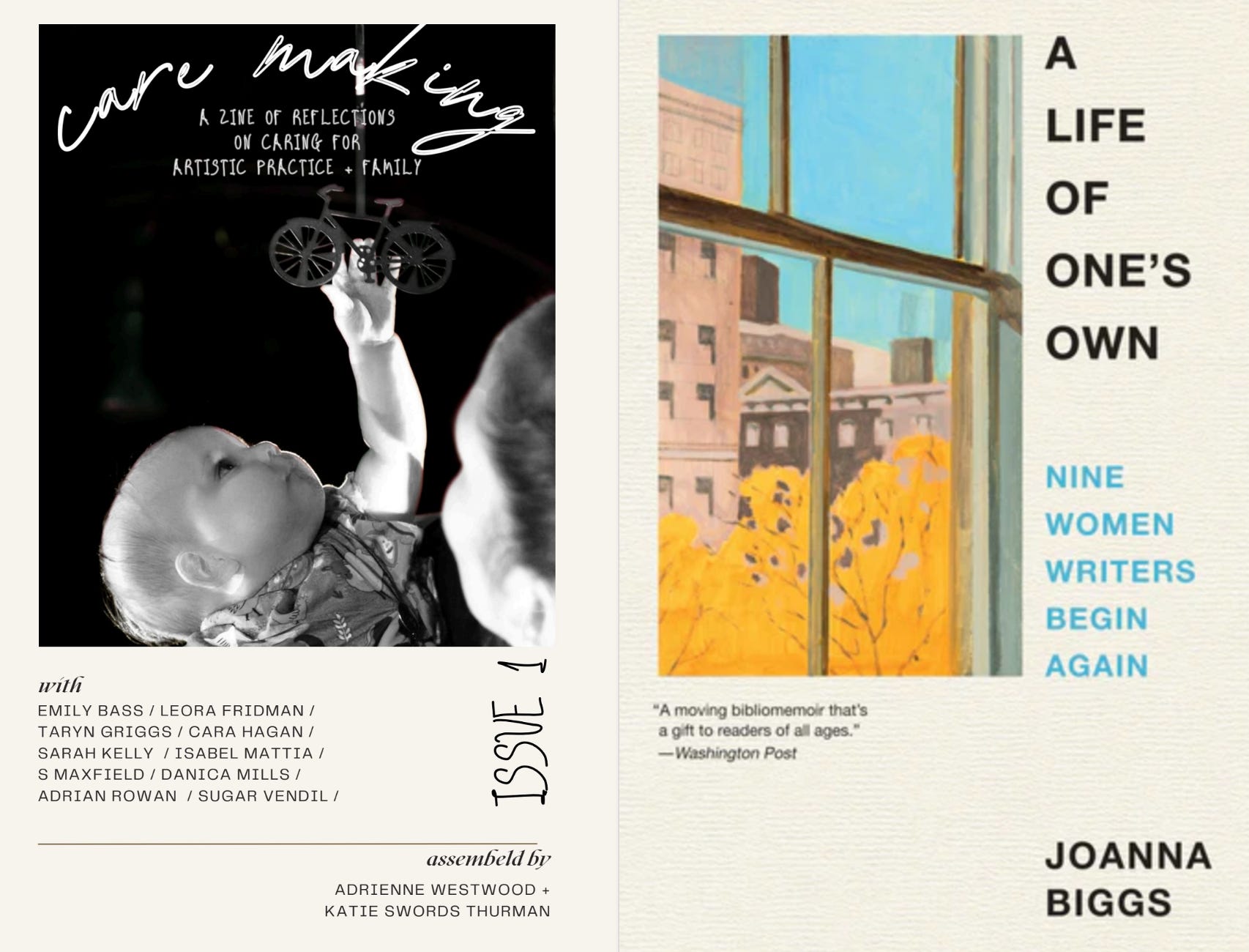
Last month I had the honor of facilitating a public conversation for the launch of Caremaking, a new zine thinking about artistic and family practice. Listening to other parent-artists reflect on what they make and how, I was struck by how lucky I am to have become a parent on the heels of a wave of artist-parent visibility. For years before I became a parent I was aware of things like Sustainable Arts Foundation, Lenka Clayton’s Artist Residency in Motherhood, Interlude Artist Residency and others. From my perspective, the last ten years have seen a swell in this work — not necessarily making artist-parenting easier, but definitely recognizing its realities more.
I joked at the Caremaking launch that it was my artist-parent coming-out party. Coming out, then, into a field already investigated, I tried to push for some area of the conversation that hadn’t been had yet. I thought as I did this of Joanna Biggs’ book A Life of One’s Own, a critical-personal text examining how eight women writers created the conditions for their own intellectual freedom. Biggs balances lyricism and lucidity to show how her own adult life was made possible by that of these women: “it takes the effort of imagining another sort of life before anyone can believe in it and live it,” Biggs writes.
That imagining effort has been started for me by other writer-artist-parents, and it allows me to feel that my life is my own (perhaps obvious, but remarkable given that childbearing parents have not felt this way for most of history). “It is not that there is some magical sisterhood,” Biggs writes, “but that voices must accumulate before a single one can speak.” Underneath my feet, in my voice, I feel this sense of accumulation.
I’m so happy I read Biggs’ book recently, positioned on this side of becoming a parent, because it offered me an opportunity to consider differently the literary and artistic role models I used to hold, who are primarily childless and unmarried women. Do I still get to keep them close? How?
Biggs addresses this question when she describes the lives of avowedly anti-patriarchal women who married or had kids, even the gossip mill and judgements that swirled around them because of those choices. Just last week, someone asked me if I always knew I wanted to parent, a question I always try to answer honestly because its answers often seem obscured. I never felt certain about having children until I did. I can only partially explain how I decided to do it. Part of how I made that decision remains intuitive, ineffable, even (most?) to me.
It pains me that not everything can be explained. It feels like a betrayal of my past self, and it feels like a betrayal of my friends who aren’t parents, to whom I can’t fully explain how I left their ranks, or, sometimes, how I feel on this side. I try—here and other places—but, more and more, I settle into the reality that I cannot explain it all. I lean on writing I’ve done for years about what cannot be explained about physical pain, an inarticulable position that (oops) I’ve still tried to articulate in writing. I’ve landed somewhere in the contradiction of being a highly social self while knowing we can’t be conveyed, leaning on experimental writing and theoretical traditions that offer permission for identity to be partial and ongoing.
Last month I started bringing my child into the bed with me for naps, something we hadn’t allowed sooner because of the risks of SIDS, smothering, etc. The baby is old enough and sturdy enough now that napping together feels safe for us. (No shade to any parent who has been co-sleeping from the beginning or never wants to share a bed with their child. Truly hope you do whatever is right for you and your kid.)
Maybe because I didn’t do it right away, the co-sleeping feels extremely blissful now. A few weeks ago I woke up on a vacation bed, staring out the lapping Hood Canal, my kid sleeping curled against me, a small hand on my chest, chonky feet on my thighs. I listened for what it was like to be together like this, a baby belly pushing on mine with the out breath, thinking of Olga Ravn in My Work: “to become your mother not by adapting to your rhythm but surrendering to your breath.” But I wanted my own words. I tried to articulate what felt so good about this: desiring not just the physical details and vacation-reality, but criticality, an idea about what we were doing together. I wanted to delve and develop some interesting or original thought about it.
I couldn’t do it. “Blissful” remains the best I can do, a received word that feels totally empty when I use it.
So maybe the emptiness is the bliss. I know, so Buddhist of me. But I mean something slightly different—that I’m coming to a new phase of understanding the inarticulable as valuable, even essential. I will not go full Buddhist because I will not stop trying to articulate.
Joanna Biggs again, writing of Mary Evans (aka George Eliot), describes Evans feeling a “vagueness and inaccuracy…of distinct, vivid ideas,” and wanting to name these ideas to escape the vagueness. Biggs compares this to a moment watching a sunset with her nephew in which he attempts to name all the colors but cannot capture the entire reality he sees. “All my brother and sister-in-law and I could do was be astonished with him, and encourage him in the attempt,” Biggs writes.
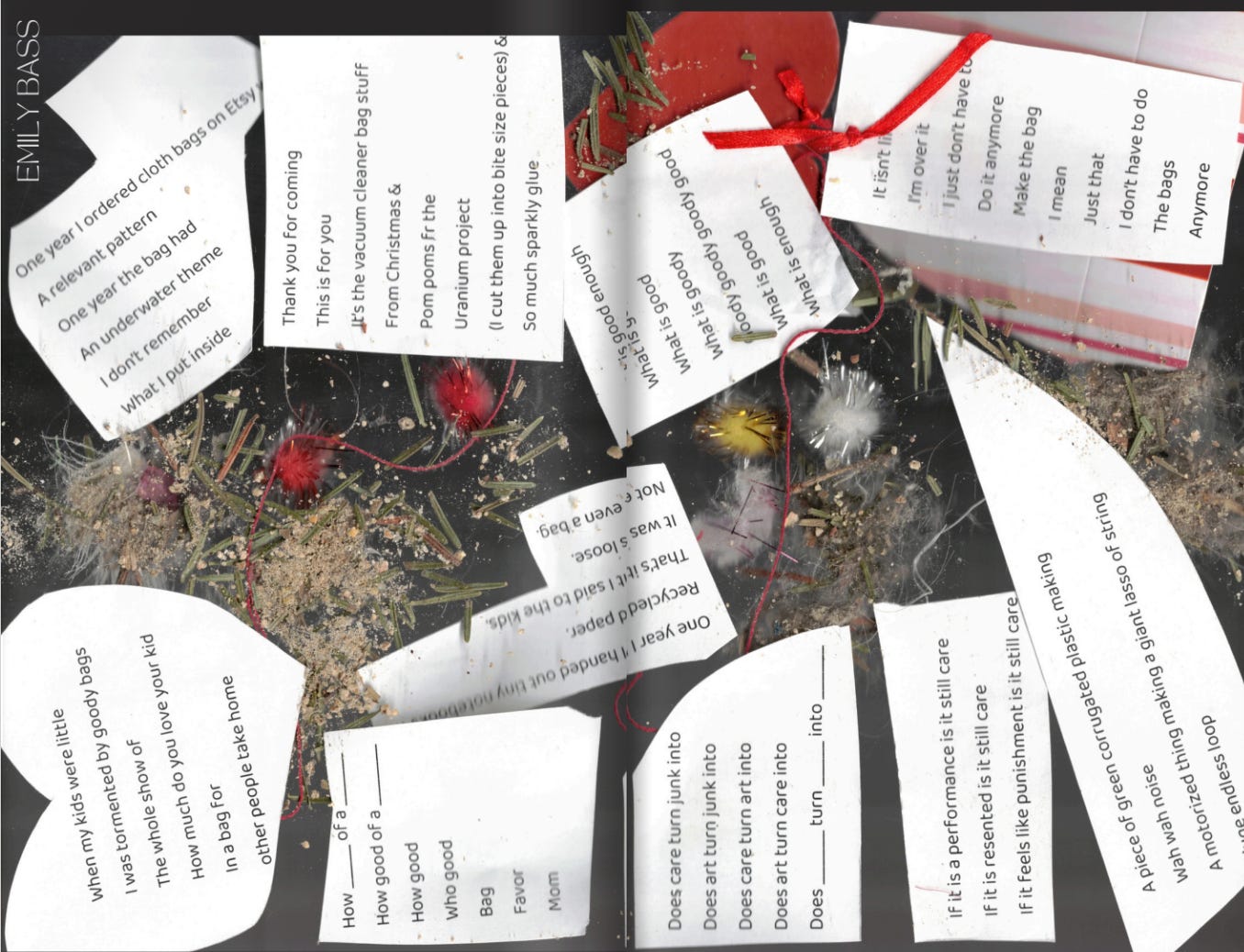
I am “astonished with” myself in the bliss, which at times feels so close right now, so easily accessible. Horrors of the world abound, and I try to stay in contact with these and also feel grateful for small interpersonal contexts that touch bliss. I think this is possible really because I was prepared, again, by other parents, by Ravn, by other parent-writers—who mostly, honestly, prepared me for far worse situations than that in which I find myself.
Biggs writes carefully about what it means to relate to other people’s lives to comprehend one’s own. “Their example exists not in order that I might slavishly follow it but so that I might develop the confidence to let go of them and become the author of my own life,” Biggs writes. I feel a heady amount of agency to author what parenting (and marriage, and writing with these) means to me. I feel this because a range of other examples exist.
“Neglected wives make the best mothers,” Biggs writes, summarizing an argument of Mary Wollstonecraft’s. I wasn’t and am not neglected. I want more models of loving mothers who are well-fed relationally, not devoted to a child because they have no other place to put their love. (Please reply with your own models and examples in this realm!)
Even when I do find models of parenting from relational abundance, I try not to over-identify. (“I am sadly not you,” I wrote last spring.) I try to lay my role models and examples down like a mosaic or a path bricked from objects of many shapes, not to “slavishly follow” but to know I stand upon, come after, live after.
In this mode I feel well-accompanied, closely companioned, in the way books and art can offer, not needing to match exactly. Last week I finally read Dorothy Baker’s Cassandra at the Wedding, thanks to a recommendation from the geniuses at Hagfish (their newsletter, Bottom Feeder, is not to be missed!). Though the book centers on twins and the closeness and divergence in their relationship, I found it one of the more hilarious and cutting depictions of codependent female friendship I’ve ever met. Though I know many understand Cassandra as a critical text about family, I read it as “friendship studies.”
If you haven’t already had the privilege of being recommended Cassandra at the Wedding, go find it now. Then recommend it to your friend who it will cut the most. Nothing builds a friendship like a risky book recommendation, the kind that works like a tarot reading or a personality test. I mean: the recommender sees something in the recommend-ee that matches something in the book, and then waits to hear if the recommend-ee will see this also, or if it will remain private, something that was clear to one side of the friendship but not the other.
“You’re a good doctor,” a friend said to me last month, referring to my practice of extremely personalized book recommendations. “You know what I need.” I was both floored by the compliment, and terrified — eventually, someday, I know I will recommend the wrong thing. Luckily I know this will not break us — she is a friend who allows difference, even values it.
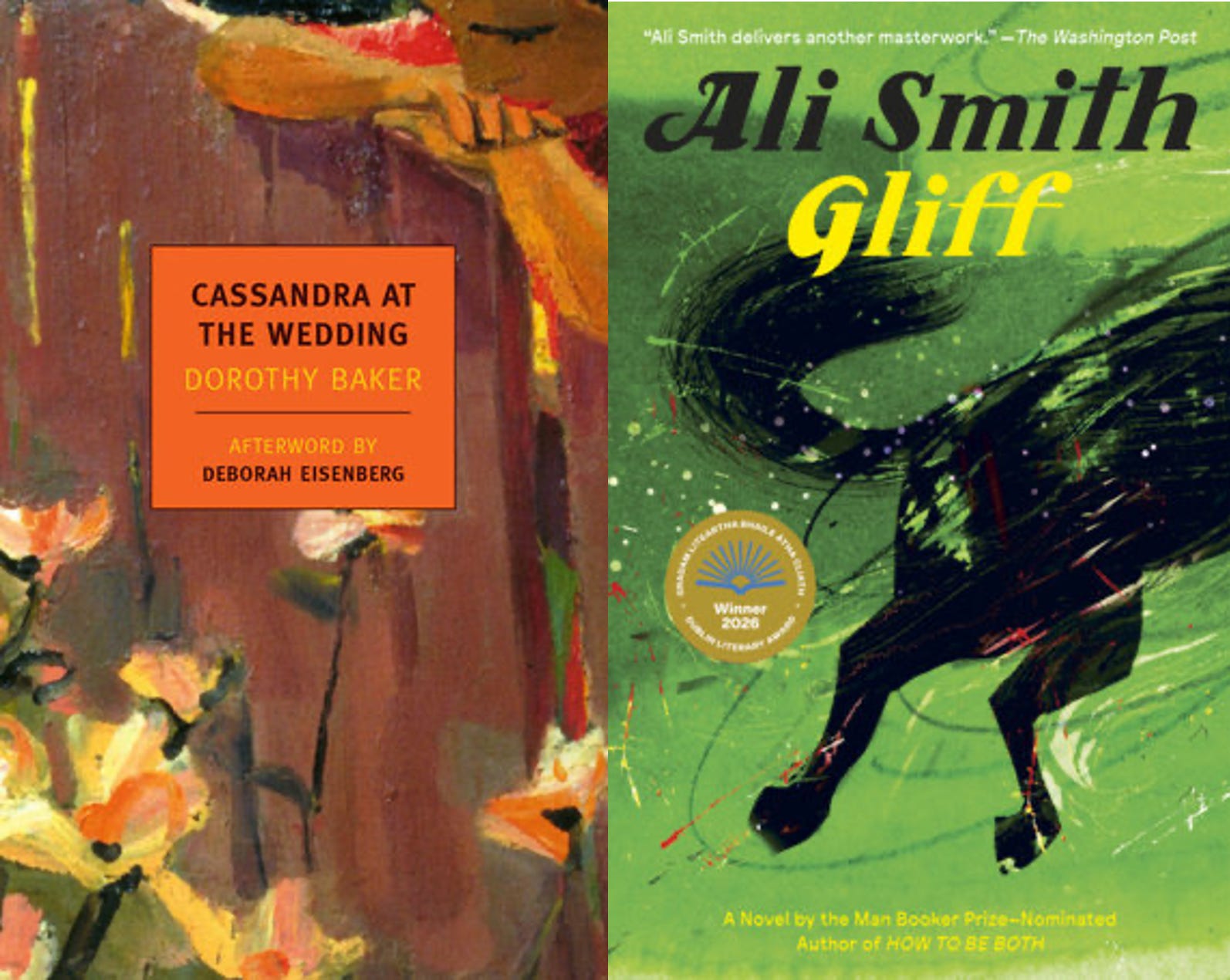
One last rec for you before I go, passed on from another writer I have long respected tremendously — so glad I found Hilary Plum’s newsletter in time to note her recommendation of Ali Smith, who I’d never read. I started with Gliff, a novel of tremendous care between people who don’t fully understand one another, a novel that resists cultures of surveillance through this kind of love. Thank you, Hilary!
I’ll also take this opportunity to swerve and draw to your attention to the mysterious semi-closure of Cleveland State University’s Poetry Center, of which Hilary has been a key sustainer and guide, along with the majestic Caryl Pagel. CSU published my first book and the books of many excellent poets and writers, taking risks on and promoting the experimental literature essential to my life and living. More info here, and info on Hilary’s Instagram if you too feel close to CSU and would like to contact administrators to advocate against this mess.
So much mess, friends. And so many quality recommendations to keep us here.
Thank you for reading,
Leora